About

Education after Totalitarianism: Legacies and Transformations in Central and Eastern Europe

International Scientific Conference
October 1–2, 2026

The years 1989–1991 marked a historic turning point when the nations of Central and Eastern Europe freed themselves from Soviet and socialist systems and entered a new phase of democratic statehood, cultural development, and societal transformation. Education became one of the key arenas of this transition. Across the region, education systems underwent profound changes in values, institutional structures, and curricular content, moving away from ideologically driven models toward more open systems fostering critical thinking, civic responsibility, and European integration.

The conference focuses on the transformation of education systems in Lithuania and other Central and Eastern European countries after 1989–1991, from early reforms to present-day challenges. More than three decades later, these processes reveal both shared regional patterns and significant differences. Most countries have undergone similar developments, including cycles of decentralization and recentralization, implementation of the Bologna Process, and ongoing digitalization with the growing influence of artificial intelligence. These changes have been accompanied by a stronger emphasis on inclusive education, rising concerns about data protection and cybersecurity, and simultaneous trends toward greater inclusion and increasing polarization.

Compared to neighbouring countries, Lithuania’s trajectory reflects both shared regional trends and distinct national developments. The reform of the Soviet education system began with the introduction of the concept of a national school, which since the early 1990s has evolved into a model increasingly integrated into the European educational space and oriented toward the promotion of liberal democratic values. Since 1990, non-state schools have also emerged alongside state institutions, established not only by commercial actors but also by local communities. Through the adoption of globally recognized educational paradigms—such as Catholic and other Christian approaches, Montessori, Waldorf, Summerhill, humanistic, open-air, and Suzuki methods—as well as the development of locally distinctive models, educational diversity has significantly expanded. However, key challenges remain, including regional disparities, inequality among schools as communities and institutions, the declining prestige of the teaching profession, bureaucratisation, and uneven reform implementation, as well as a mismatch of existing school buildings with the spatial needs of up-to-date educational methods.

This conference aims to examine and compare the transformation of education systems in Lithuania and other Central and Eastern European countries from 1989–1991 to the present day. It seeks to explore both the historical foundations of educational reform and the contemporary challenges shaping the future of education in the region.

Preliminary Program

OCTOBER 1

8:30–9:00 | Registration

9:00–9:30 | Opening Remarks

9:30–10:00 | KEYNOTE LECTURE
Nelima Lassen (International People’s College, The Danish Folk High Schools, DENMARK)
Danish Folk High Schools: Enlightenment, Democracy, and the Formation of Active Citizens
Chair: Ilona Strumickienė (Martynas Mažvydas National Library of LITHUANIA)

10:00–10:30 | Coffee Break

10:30–11:45 | SESSION I
REIMAGINING EDUCATION AFTER SOCIALISM: NATIONAL VISIONS AND SYSTEMIC CHANGE

Daiva Penkauskienė (Mykolas Romeris University, LITHUANIA)  & Eglė Pranckūnienė (Klaipėda University, LITHUANIA)
The Idea of a National School in Lithuania: Confrontation of Interpretations

Justinas Vancevičius (Martynas Mažvydas National Library of LITHUANIA)
Caught Between the Socio-Cultural and Neoliberal Models: Is the Education System Experiencing an Identity Crisis?

Alena Marková (Charles University, CZECHIA)
The Transformation of Post-Soviet Education in Belarus in the 1990s: From Communism to Ethnonationalism

Chair: Kadri Koreinik (University of Tartu, ESTONIA)

11:45–13:00 | Lunch

13:00–14:15 | SESSION II
EDUCATION, IDENTITY AND DEMOCRATIC CITIZENSHIP

Dainius Genys (Vytautas Magnus University, LITHUANIA)
Knowledge Without Action? The Paradox of Civic Education Development in Post-Soviet Context

Kadri Koreinik (University of Tartu, ESTONIA) & Kara Brown (University of Tartu, ESTONIA; University of South Carolina, USA)
Unifying a divided public school system: Transforming upper secondary education to Estonian as part of a broader de-empiring process

Tetiana Ponomarenko (Vytautas Magnus University, LITHUANIA)
Reconceptualizing Soviet Rule: The Transformation of Historical Narratives in Ukrainian History Textbooks (1994–2024)

Chair: Silvija Zujūtė (Martynas Mažvydas National Library of LITHUANIA)

14:15–14:45 | Coffee Break

14:45–16:00 | SESSION III
EDUCATION ACROSS BORDERS: INTERNATIONAL SUPPORT AND DIASPORA

Ilona Strumickienė (Martynas Mažvydas National Library of LITHUANIA)
From National Recovery to Global Lithuania: The Evolution of Lithuania’s Diaspora Education Policy

Vito Saracino (University of Foggia, Apulian Gramsci Foundation, ITALY)
Italy’s Commitment to Rebuilding the Albanian Education Sector from the Transition Phase to the Democratic System

Emilija Sakadolskis (Vilnius University, LITHUANIA) & Carol Ramsey (The University of Texas at Austin, USA)
The impact of A.P.P.L.E. (The American Professional Partnership for Lithuanian Education) on educational reform

Chair: Dalia Cidzikaitė (Martynas Mažvydas National Library of LITHUANIA)

16:30–18:00 | FILM SCREENING
Mr. Nobody Against Putin (2025, directed by David Borenstein and Pavel Talankin)

18:00 | RECEPTION

OCTOBER 2

9:30–10:45 | SESSION IV
TRANSFORMING HIGHER EDUCATION: SYSTEMS, GOVERNANCE AND ACADEMIC IDENTITIES

Rūta Bružienė (Vilnius University, LITHUANIA)
From Soviet to Post-Soviet to Neoliberal: The Transformation of the Lithuanian Higher Education System

Monika Orechova (Vilnius University, LITHUANIA)
Becoming European? Internationalisation and the Transformation of Higher Education in Lithuania and Estonia after 1990

Vilma Žydžiūnaitė & Agnė Daučianskaitė-Kubilevičienė (Vytautas Magnus University, LITHUANIA)
Indications of the Departure from the Soviet Higher Education System and Changes in the Academic Identity of Scientists from the Soviet to the Current Times.

Chair: Vilma Losytė (Martynas Mažvydas National Library of LITHUANIA)

10:45–11:15 | Coffee Break

11:15–12:30 | SESSION V
EDUCATIONAL TRANSFORMATION AND ITS SOCIAL CONSEQUENCES

Iryna Druzhkova & Iryna Annienkova (Odessa National Medical University, UKRAINE)
From Soviet Educational Legacies to Democratic Values in Ukrainian Healthcare Education (ONLINE)

Auksė Petruškevičiūtė (Vytautas Magnus University; Mykolas Romeris University, LITHUANIA; Lithuanian Social Pedagogues Association)
The Formation and Development of Socio-Pedagogical Support in Lithuania after 1990: From an Institutional Innovation to an Integral Part of the Educational Support System

Michael L. Smith (Czech Academy of Sciences, CZECHIA)
Overeducation and Credential Inflation in the Czech Republic: Measurement, Analysis, and Implications for Central and Eastern Europe

Chair: Ignė Rasickaitė (Martynas Mažvydas National Library of LITHUANIA)

12:30–14:00 | Lunch

14:00–14:50 | SESSION VI
RETHINKING EDUCATIONAL SPACE: ARCHITECTURE, PEDAGOGY AND PARTICIPATION

Olena Gella (O.M. Beketov National University of Urban Economy in Kharkiv, UKRAINE) & Kateryna Didenko (Vilnius TECH, LITHUANIA)
Experience of a pedagogical experiment: transforming architectural education in Kharkiv (1988–2022)

Dina Dorothea Falbe & Daniel Hülseweg (University of Applied Sciences Wismar, GERMANY)
Participatory Approaches in the Transformation of GDR Type School Buildings

Chair: Liutauras Nekrošius (Vilnius TECH, LITHUANIA)

14:50–15:20 | CLOSING REMARKS
Legacies and Transformations: What Have We Learned from Three Decades of Educational Change?

Chair: Ilona Strumickienė (Martynas Mažvydas National Library of LITHUANIA)


Speakers

Vilma Žydžiūnaitė
Justinas Vancevičius
Ilona Strumickienė
Michael L. Smith
Vito Saracino
Emilija Sakadolskis
Carol Ramsey
Eglė Pranckūnienė
Tetiana Ponomarenko
Auksė Petruškevičiūtė
Daiva Penkauskienė
Monika Orechova
Alena Marková
Nelima Lassen
Kadri Koreinik
Daniel Hülseweg
Dainius Genys
Olena Gella
Dina Dorothea Falbe
Iryna Druzhkova
Kateryna Didenko
Agnė Daučianskaitė-Kubilevičienė
Rūta Bružienė
Kara Brown
Iryna Annienkova

Vilma Žydžiūnaitė

Vytautas Magnus University (Lithuania)

Vilma ŽYDŽIŪNAITĖ is PhD in Social sciences, Education, and Full Professor at the Department of Education Management and Policy, and the Chief Researcher at the Educational Research Institute, Vytautas Magnus University. Prof. Vilma also holds the PhD in Nursing science. She is the (co)author of more than three dozen study books and monographs, has published nearly two hundred scientific articles, has read over two hundred scientific papers at international conferences, and has supervised nearly thirty successfully defended scientific dissertations. Her research interests in educational sciences include higher education, the development of academic and professional identity in higher education, intellectual leadership of the researcher, educational leadership, value-based higher education, and the preparation of specialists for the national and international labor market. Her interests also include ethical dilemmas and intellectual and instrumental solutions in research methodology.

Justinas Vancevičius

Martynas Mažvydas National Library of Lithuania

Justinas Vancevičius has more than 10 years experience of working as an educator and cultural manager. He a co-founder of the reading promotion program “Children’s World” which organizes literature festivals, co-creation projects and other reading promotion activities. Currently, he is also the Head of the Children and Youth Literature Center at Martynas Mažvydas National Library of Lithuania. His endeavours in the fields of culture and education have been recognized by awards from both the Ministry of Culture and the Ministry of Education, Science, and Sport. He has recently received Master Degree in Educational Sciences. The topic of his theses focused on elective educational content and its potential to transform the system of education in Lithuania.

Ilona Strumickienė

Martynas Mažvydas National Library of Lithuania

Dr. Ilona Strumickienė is a historian whose research focuses on the history of the Lithuanian diaspora, particularly its Catholic movement, as well as migration, memory politics, and twentieth-century Lithuanian history. She serves as Head of the Statehood Centre at the Martynas Mažvydas National Library of Lithuania. Her doctoral dissertation examined the history of the Ateitis Federation, a Lithuanian Catholic youth and intellectual movement, in exile during the 1940s–1960s. Her research and publications focus on diaspora history, return migration, and the relationship between Lithuania and its global communities. She is also a researcher in the Vilnius University project Ateitis Federation in Exile, 1945–2020: Diaspora Concerns and Global Challenges.

Michael L. Smith

Czech Academy of Sciences (Czechia)

Michael L. Smith, Ph.D. is a Senior Researcher at the Institute of Sociology, Czech Academy of Sciences. He received B.A. degrees from the University of Washington in Seattle (1998), M.A. from Boston College (2000), and his PhD in Political Science (2008) from the New School for Social Research in New York, where he also received the Hannah Arendt Prize for Best Dissertation. During his studies he was a David L. Boren Fellow, a Jacob K. Javits Fellow, an IREX fellow, and a short-term scholar at the Woodrow Wilson International Center for Scholars. He is also a Lecturer at the University of Washington, Seattle. He was one of three principal investigators leading the development of the annual Czech Household Panel Study, the largest sociological longitudinal study conducted in the Czech Republic, and has helped implement ISSP surveys and PIAAC follow-up surveys in the Czech Republic. He also led the team creating www.politickefinance.cz, the database of Czech political party financing. He serves as a member of the international editorial board of the journal Social Forces and serves as a referee to other leading sociological journals. He has published in Sociology of Education, Education Economics, British Journal of the Sociology of Education, Compare, Comparative Education Review, and other journals in the sociology of education.

Vito Saracino

University of Foggia and Apulian Gramsci Foundation (Italy)

Vito Saracino is a historian and researcher at the University of Foggia and Apulian Gramsci Foundation. His work focuses on the cultural and educational relations between Italy and Albania, as well as on broader themes in transnational history, public memory, and the social role of institutions in post-socialist transitions. He has published with Palgrave Macmillan A Century of the media A Century of the Media in Italian-Albanian Cultural Relationships (2024) History of Schooling in Albania (2026) and Taylor & Francis on related topics, combining archival research with the study of cultural diplomacy, educational change, and Adriatic connections. His current research explores the long-term impact of Italian cultural policy in Albania and the role of language, schools, and universities in shaping post-totalitarian transformations.

Emilija Sakadolskis

Emilija Sakadolskis

Vilnius University (Lithuania)

Emilija Sakadolskis received a Ph.D. in Curriculum and Instruction from the University of Maryland.  She moved to Lithuania in 2004 and taught at Vilnius College, The Lithuanian University of Educational Sciences, Vytautas Magnus University, and currently at Vilnius University.  She has extensive expertise in teacher education, professional development, and qualitative educational research. Her research and publications have focused on teacher preservice education, teacher motivation, professional socialization and continuing professional development, multicultural and integrated curricula, music learning theory, early childhood musical development and curricula. She has also participated in working groups organized by the Lithuanian Ministry of Education related to educational policy and the teaching profession, as well as in curriculum development projects implemented for the National Education Agency. She was active in the A.P.P.L.E. organization’s administration for many years and served as president from 1998 to 2000.

Carol Ramsey

Carol Ramsey

The University of Texas at Austin (USA)

Carol Ramsey received a master’s degree in STEM Education from The University of Texas at Austin, where she researched improving STEM engagement and performance for underrepresented students. She is currently an Assistant Professor of Computer Science at the University of Texas at Austin, where she rebuilt the introductory computer science course, incorporating student-centered and activity-based pedagogies to increase learning for all students. She has a Computer Science bachelor’s degree from The University of Texas and twenty years of experience in software engineering. She has a Secondary Education bachelor’s degree and teaching experience in industry, high schools, community colleges and universities. She has also led high-profile programs to increase access to computer science education in US schools. She presented at A.P.P.L.E. in 1995 (Using Computers in the Classroom) and 2013 (Storytelling as Pedagogy for Language Learners).

Eglė Pranckūnienė

Klaipėda University (Lithuania)

Dr. Eglė Pranckūnienė is the founder of the Centre for School Improvement and a researcher at the Department of Human and Social Sciences at Klaipėda university. Her scientific interests include educational leadership, the professional life of educational practitioners, and action research of educational practice. Eglė is the president of Lithuanian educational research association and an active participant of educational reform of Lithuania since 1992.

Tetiana Ponomarenko

Vytautas Magnus University (Lithuania)

Tetiana Ponomarenko, PhD, is a Lecturer in the Department of Modern Didactics at the Education Academy of Vytautas Magnus University, Lithuania. Her research focuses on teacher education, professional identity and leadership, educational leadership, and lifelong learning. Her current research interests include language and history education, teaching didactics.

Auksė Petruškevičiūtė

Vytautas Magnus University, Mykolas Romeris University (Lithuania)

Auksė Petruškevičiūtė, PhD, is a lecturer at the Education Academy of Vytautas Magnus University and Mykolas Romeris University, and Director of the Lithuanian Social Pedagogues Association. Her academic and professional work focuses on social pedagogy, educational support, inclusive education, child welfare, prevention, early school leaving, and productive learning. She is a member of the Social Pedagogy and Social Education Global Alliance and a Board Member of the International Network of Productive Learning Projects and Schools. She is also a Board Member of the Lithuanian Educational Research Association and a member of the editorial boards of the scientific journal Socialinis ugdymas and the International Journal of Social Pedagogy. She participates in national and international expert activities related to education, child welfare, social inclusion, and educational support. She is involved in an international education project in Rwanda, contributing to early childhood education, parental engagement, foundational learning, and evidence-based support practices.

Daiva Penkauskienė

Mykolas Romeris University (Lithuania)

Dr. Daiva Penkauskienė is the director of Modern Didactics Centre and an associate professor at the Institute of Education and Social Work, Mykolas Romeris University. Her scientific interests in the domain of pedagogy include modern didactics, development of critical thinking, and in the domain of education research – qualitative research methodologies, philosophy of education. As the researcher, she is actively engaged in the national and international projects. Daiva Penkauskienė has been one of the active participants of education reform in Lithuania since 1987.

Monika Orechova

Monika Orechova

Vilnius University (Lithuania)

Monika Orechova, PhD is an experienced higher education manager and one of the primary internationalisation researchers in Lithuania. Her academic work is largely focused on the systemic development of higher education in the context of wider socio-political change, particularly in Central and Eastern Europe. Her other research interests include the impact of neoliberal policies in higher education, university didactics, comparative education and conceptual history. She is currently Deputy Director of the Institute of Educational Sciences at Vilnius University, a member of the Editorial Board of the journal Tertiary Education and Management (Springer Nature) and a member of the Research Policy Committee of the Lithuanian Academy of Sciences.

Alena Marková

Alena Marková

Charles University (Czechia)

Dr Alena Marková is an Assistant Professor in the Department of Historical Sciences at the Faculty of Humanities, Charles University, Czechia. Her research focuses on the contemporary history of Belarus and Central and Eastern Europe, with particular emphasis on nationalism, nation-building, national identity, language politics, and post-socialist transformation. Her work explores the intersections of national identity, language, education, and state-building in the Soviet and post-Soviet contexts. Her publications include The Path to a Soviet Nation: The Policy of Belarusization (Paderborn: Brill Schöningh, 2021) and A History of Belarus (co-authored; Prague: NLN, 2021).

For more information, please visit the personal webpage:
https://fhs.cuni.cz/FHSENG-1486.html

Nelima Lassen

Nelima Lassen

Principal at The International People’s College, The Danish Folk High Schools (Denmark)

Nelima Lassen is the Principal of The International People’s College, a Danish folk high school dedicated to global dialogue, democratic engagement, and intercultural understanding. She brings extensive experience in international leadership, education, and humanitarian and development work, having previously held senior leadership positions with the Red Cross in Africa, the Middle East, and Europe.

Nelima has a deep personal connection to the folk high school tradition and its values of dialogue, active citizenship, and learning across differences. In her work, she focuses on creating educational environments that empower individuals to engage with global challenges and contribute to more democratic, sustainable and peaceful societies.

Kadri Koreinik

Kadri Koreinik

University of Tartu (Estonia)

Kadri Koreinik is an Associate Professor of Sociology of Language at the Institute of Estonian and General Linguistics, Department of Applied Linguistics, University of Tartu, Estonia. Her research focuses on language policy, multilingualism, minority and regional languages, linguistic landscapes, and the social dimensions of language use and change. She is interested in the extralinguistic factors that shape language use, with particular attention to language practices and policies in multilingual and minority-language communities. Her research has addressed the South Estonian variety Võro and the experiences of Russian-speaking students in schools transitioning to Estonian-language instruction in North-East Estonia. She has published on language policy, language ideologies, minority languages, and multilingualism. She is co-editor of Language Policy Beyond the State (Springer, 2017) and Revoicing Intangible Cultural Heritage: Perspectives from the Margins of Europe (Routledge, 2025).

Daniel Hülseweg

University of Applied Sciences Wismar (Germany)

Daniel Hülseweg is a freelance architect based in Berlin. Following years of teaching and research at Technical Universities in Braunschweig and Berlin (G), he has served as a substitute professor for building construction, materials science, and architectural design at Wismar University of Applied Sciences since 2021. He is part of the research group Lernraumlabor. His work focuses on sustainable, context-sensitive transformation processes for public buildings and educational facilities, with an emphasis on developing participatory design strategies for practice-oriented and community-based projects.

Dainius Genys

Vytautas Magnus University (Lithuania)

Sociologist Dainius Genys – is a senior researcher at Andrei Sakharov Research Center for Democratic Development, Lithuanian Emigration Institute and Educational Research Institute at Vytautas Magnus University (Kaunas, Lithuania). His research interests, among others, include democratization processes and civic education research as well as higher education discourse analysis. In his work, Dainius is focusing on relations among dominant topics as well as practices in educational methods with wider social problems trending in the country. He took part in many research projects dedicated to the creation of innovative research methodologies and its implementation (interdisciplinary, cross national, comparative, monitoring and etc.). Dainius has participated in national science foundation projects as a researcher and project team leader as well as in international Erasmus, Leonardo da Vinci, Horizon and others programs. Recently D. Genys is working on construction of the professional identity of young people entering the labor market and social media role in process. Dainius is also currently conducting a research on the dynamics of civic education and its implementation efficiency at different settings. His peculiar approach is often based on sociological imagination and interdisciplinary methodology and critical discourse analysis. He is a member of Lithuanian Sociological Association, the European Sociological Association, International Sociology Association, the Advancement of the Baltic Studies Association (AABS) and other organizations.

Olena Gella

O.M. Beketov National University of Urban Economy in Kharkiv (Ukraine)

Olena Gella is an architect, researcher, and educator specialising in architectural education, urban planning, and professional culture. She graduated from Kharkiv State Technical University of Construction and Architecture in 1995, completed postgraduate studies in the Theory of Architecture and Restoration of Architectural Monuments, and earned a PhD in Architecture in 2000. She taught at Kharkiv National University of Construction and Architecture from 2000 to 2022 and has been an Associate Professor at O.M. Beketov National University of Urban Economy in Kharkiv since 2023. Her research focuses on the transformation of architectural professional culture and education, particularly in post-socialist contexts. Her broader interests include twentieth-century architectural heritage, ecological approaches to urban development, participatory practices, and the modernisation of urban and architectural systems in Ukraine.

Dina Dorothea Falbe

University of Applied Sciences Wismar (Germany)

Dr. Dina Dorothea Falbe studied architecture at Bauhaus-University Weimar (G) and TU Delft (NL). In 2025 she completed her doctoral dissertation on the history of GDR type school buildings at University of Groningen (NL) receiving the Jutta Held Award of Zentralinstitut für Kunstgeschichte (Central Institute for Art History) in Munich. She is currently working at the Faculty of Design at the University of Applied Sciences in Wismar, where she is involved in the research group Lernraumlabor focusing on the transformation of school buildings as well as the Müther-Archive dedicated to the heritage of East-German architecture from the northern region.
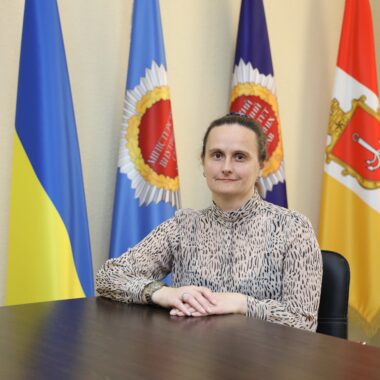
Iryna Druzhkova

Odessa National Medical University (Ukraine)

PhD in History, Associate Professor, Department of Healthcare Management and Psychology, Odessa National Medical University, Odesa, Ukraine.

Kateryna Didenko

Vilnius Gediminas Technical University (Lithuania)

Kateryna Didenko is an architect and researcher. She earned a PhD in Architecture in 2019 from Kharkiv National University of Civil Engineering and Architecture, Ukraine. Her main research field is the history and preservation of modernist architectural and urban heritage, as well as the changing urban identity of post-socialist monotowns. She is an Associate Professor and Senior Research Fellow at Vilnius Gediminas Technical University, Lithuania. Previously, she served as Vice-Dean for International Relations at the Faculty of Architecture at Vilnius Gediminas Technical University, Lithuania (2022–2024), and as Associate Professor in the Department of Architectural Fundamentals of Kharkiv National University of Civil Engineering and Architecture, Ukraine (2019–2022). She has presented at international scientific conferences, published a number of articles on modernist architecture, and served as a Guest Editor of the Docomomo Journal special issue “Imperfect Modernism” together with Liutauras Nekrošius. Kateryna is a member of DOCOMOMO Lithuania.

Agnė Daučianskaitė-Kubilevičienė

Vytautas Magnus University (Lithuania)

Agnė DAUČIANSKAITĖ-KUBILEVIČIENĖ is PhD in Social sciences, Education, and Researcher at Educational Research institute, Education Academy, Vytautas Magnus University. She is a co-author of several international scientific publications. She works in the MA of music education program at the Department of Modern Didactics at VMU, where she teaches Educational Leadership and Project Management. Her research is related to the education of professional performers, the development of creativity at various levels – from school to university/academy, seeing individuals, communities, and interactions in the processes, and peculiarities of higher education. She is currently leading two research projects, where the objects of research are dignified learning environments, learners’ creativity, and teacher dignity.
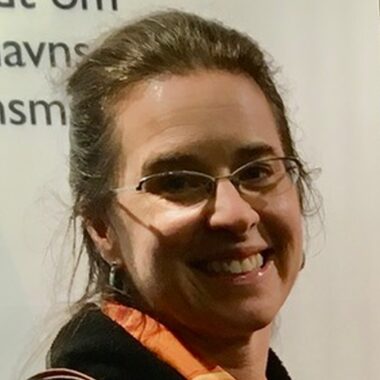
Rūta Bružienė

Rūta Bružienė

Vilnius University (Lithuania)

Dr. Rūta Bružienė is one of the leading researchers of higher education policy and management in Lithuania, working at Vilnius University’s Education Policy Centre. Her PhD thesis, The Policy of University Mergers in the Context of Neoliberalization of Lithuanian Higher Education, offers a comprehensive policy analysis of system restructuring from 1990 to 2024. Drawing on Foucault’s theory of governmentality, her research traces the trajectory of Lithuanian higher education governance from de-Sovietization to profound neoliberalisation.
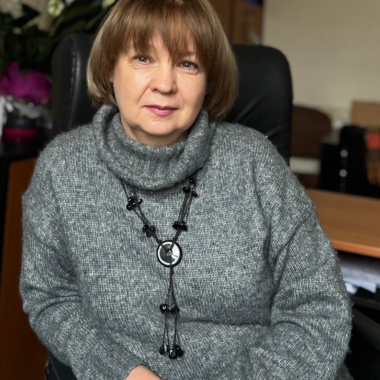
Rūta has professional experience in public sector auditing, law, and university administration. She has published several scientific articles on higher education governance and has taught various courses on education policy, management, and qualitative methodology to graduate and undergraduate students at Vilnius University. She actively contributes to the international academic community as an Executive Committee member of EAIR (The European Higher Education Society) and is a member of CHER (Consortium of Higher Education Researchers).

Kara Brown

Kara Brown

University of Tartu (Estonia), University of South Carolina (USA)

Kara D. Brown (PhD Education Policy) is a visiting professor in the Department of Applied Linguistics at the University of Tartu (Estonia; 2023-2026) and a Professor of Education Foundations and Inquiry at the University of South Carolina (US). Brown, an educational ethnographer, researches language policy, school space, and educational equity in the Baltic States and U.S.

Iryna Annienkova

Odessa National Medical University (Ukraine)

Doctor of Pedagogical Sciences, Professor, Department of Healthcare Management and Psychology, Odessa National Medical University, Odesa, Ukraine.

Other Information

Conference fee 40 Euros.

Format: In-person (exceptions will be considered on a case-by-case basis)
Venue: Martynas Mažvydas National Library of Lithuania, Vilnius, Gediminas Ave. 51
Conference language: English
Presentation Duration: 20 minutes.
Contacts: valstybingumocentras@lnb.lt

Following the conference, presenters will be invited to submit their articles to the scientific, peer-reviewed journal Relevant Tomorrow

Important dates:
Deadline for submissions: 30 June 2026
Notification of acceptance: 17 July 2026
Conference fee payment deadline: 28 August 2026

Scientific Committee:

  • Gediminas Karoblis, Vytautas Magnus University (Lithuania)
  • Prof. Dr. Arch. Liutauras Nekrošius, Vilnius TECH (Lithuania)
  • Prof. Dr. Rūta Šermukšnytė, Vilnius University (Lithuania)
  • Ilona Strumickienė, Martynas Mažvydas National Library of Lithuania (Lithuania)
  • Dolf Broekhuizen, Delft University of Technology (The Netherlands)
  • Prof. Dr. Kadri Koreinik, University of Tartu (Estonia)
  • Dr. Kara D. Brown, University of South Caroline (USA)
  • Prof. Dr. Kristian Handberg, University of Copenhagen (Denmark)

Organiser
Martynas Mažvydas National Library of Lithuania

Partners
Vytautas Magnus University, The Faculty of Architecture at Vilnius Gediminas Technical University,The Institute of Educational Sciences at Vilnius University, The Embassy of the Kingdom of Denmark in Lithuania, The Danish Cultural Institute in Estonia, Latvia, and Lithuania, the Danish Ministry of Culture.